Marietta Historic District COA Timelines Before You Renovate
August 20, 2026
August 20, 2026
A listing on Cherokee Street this year mentioned, almost as an afterthought, that the nearly acre-sized lot had room for a carriage house or a casita in back. Then came the caveat: of course, it would need to be permitted and approved by the City of Marietta first. Most readers skim past that line. It is the entire premise of what follows.
Buyers and sellers moving through Marietta's historic districts tend to treat "historic" as a single label with a single process attached to it, something you clear once and move past. That assumption is wrong in a way that costs actual weeks, and understanding why starts with recognizing that Marietta does not run one historic review system. It runs at least two, sometimes three depending on the address, and none of them move on the calendar a typical real estate contract expects.
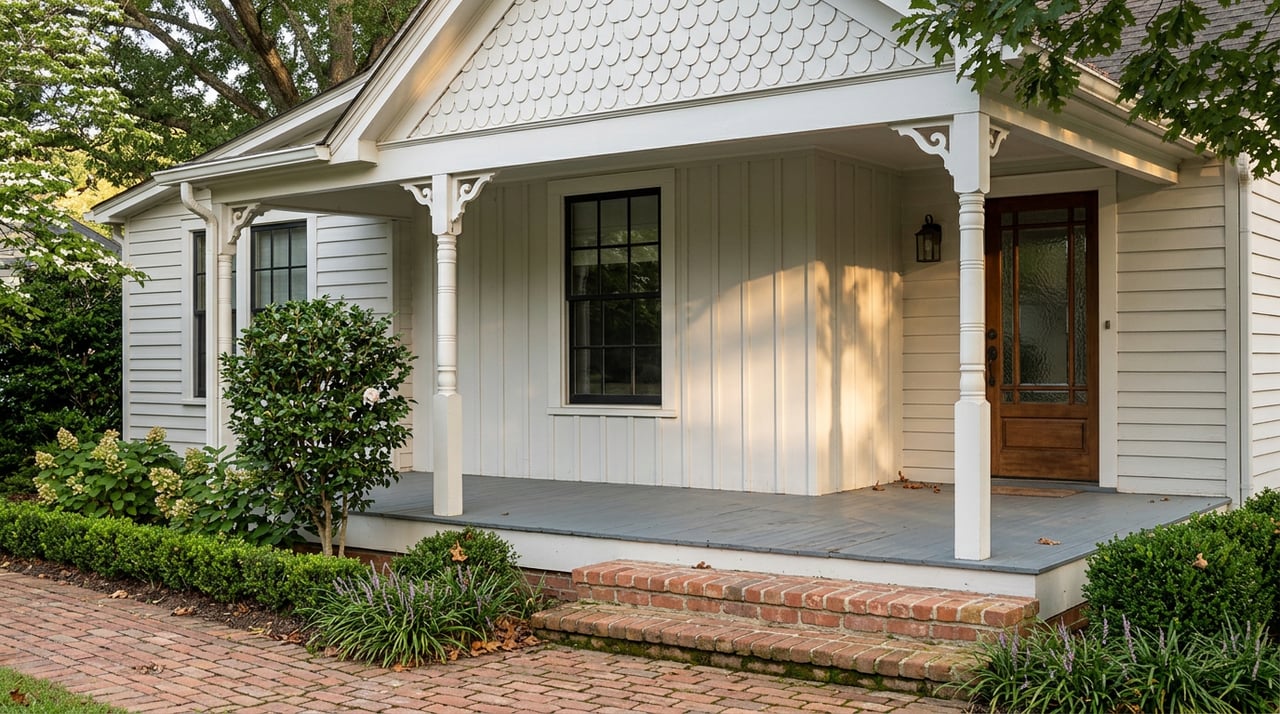
Marietta has three locally designated residential historic districts: Kennesaw Avenue, Church-Cherokee Streets, and Forest Hills. Exterior work in any of them goes through the City of Marietta's own Historic Preservation Commission, which reviews proposed changes against the district's design guidelines and issues a Certificate of Appropriateness, or COA, before a building permit can move forward.
The Downtown Marietta Historic District, the commercial blocks around the Square, is a separate case entirely. Decisions there belong to the Marietta Board of Review, a different body with its own scope.
Then there is Cobb County's own preservation apparatus, which is separate again. The Cobb County Historic Preservation Commission maintains its own Register of Historic Places, thirteen sites and two districts on the county list alone, including the Concord Covered Bridge Historic District, and the county's combined National Register and Cobb Register count runs to 41 sites and 13 districts total. That commission meets inside the Cobb County government building at 100 Cherokee Street, which sits inside Marietta's city limits, and it just changed its own meeting rhythm. Starting with the January 2026 session, the county commission moved its regular meeting from 6 p.m. to 3 p.m. and shifted to the first Monday of each month.
That schedule change belongs to the county board, not the city commission that reviews work in Kennesaw Avenue, Church-Cherokee, or Forest Hills. The two bodies are not interchangeable, and a homeowner who assumes their historic-district address routes through one predictable office is often wrong about which office. What the county's calendar shift does illustrate, accurately, is the broader pattern across every one of these boards: they are small commissions that meet on a monthly cycle, not standing offices you can walk into the week before closing.
Georgia's underlying statute is specific about the trigger. Once a property sits inside a designated historic district, no material change in the appearance of a structure within that district can be made unless an application for a Certificate of Appropriateness has been submitted to and approved by the commission first. The operative phrase is material change in appearance, and it is doing real work in that sentence. A repaint in the same color is not the same as a repaint in a new one. A replacement window matching the original profile is not the same as a swap to a different style. The line sits exactly where a project stops being maintenance and starts being a visible alteration to the street-facing character of the district.
For anyone in Kennesaw Avenue, Church-Cherokee Streets, or Forest Hills, that means a new front door, a rebuilt porch, an added carriage house, a fence replacement, or a rear addition visible from the public right of way needs a COA before the City's Building and Inspections office will issue a permit. Marietta's own application requirements make the timeline explicit: a complete COA application is placed before the Historic Preservation Commission, and the Commission is required to approve or reject it within 45 days of filing.
Forty-five days is the outer limit, not the typical wait, and it assumes the application was complete on submission. An incomplete filing, missing an elevation drawing or a required photo, does not start that clock. It gets held until it is complete, which in practice means the actual calendar math depends on when the next regular meeting falls and whether the submission made that meeting's cutoff.
| District | Local Designation | Governing Body | Character |
|---|---|---|---|
| Kennesaw Avenue | Designated August 2013, Marietta's first locally designated historic district | City of Marietta Historic Preservation Commission | About 11 acres, 15 parcels, mostly Georgian and Queen Anne two-story houses, including the Archibald-Howell House as a high-style Greek Revival example |
| Church-Cherokee Streets | District map adopted January 4, 2016; design guidelines adopted March 9, 2016 | City of Marietta Historic Preservation Commission | Mix of high-style and vernacular homes near Marietta Square, including pre-1900 cottages |
| Downtown Marietta | Commercial core around the Square | Marietta Board of Review | Storefronts and mixed-use buildings, not covered by the residential HPC process |
Forest Hills rounds out the city's third locally designated residential district, also under the Historic Preservation Commission's jurisdiction, though the city has published less public detail on its boundary history than it has for Kennesaw Avenue and Church-Cherokee.
Here is where the friction actually shows up in a transaction. A due diligence period in a typical Georgia residential contract runs on the order of one to two weeks. A repair request that comes out of an inspection, a rotted porch column, a section of siding, a fence that needs replacing before closing, is routine work in most of Marietta. Inside one of these three districts, if that repair changes the exterior appearance in a way the Commission would classify as material, it cannot simply go to a contractor. It has to go through a COA application first, and that application sits inside a process that can legally take up to 45 days even when nothing goes wrong.
A seller who lists a home in Kennesaw Avenue or Church-Cherokee without accounting for this is not taking on legal risk exactly, they are taking on scheduling risk. If a buyer's inspection surfaces a street-visible repair item and the parties agree the seller will handle it before closing, the seller now needs a completed COA application, a spot on the Commission's next meeting agenda, and a decision, all inside a window the contract almost certainly did not budget for. The state framework does offer a release valve if a proposal is denied: the Commission has to explain the denial in writing, and the applicant can revise and resubmit. That is useful due process. It is also another cycle of the same monthly clock.
If this friction were scaring buyers off, it should show up as a discount on historic-district homes relative to the rest of the market. It does not. Listings tagged as historic district or vintage in Marietta have clustered with median list prices in the high $490,000s this summer, while the broader city's median sale price across the three months ending May 2026 sat at $475,000. Historic designation in Marietta is trading at a mild premium, not a penalty.
That is the real finding here. The COA process is not a drag on value. It is a drag on timing. Buyers are willing to pay for the heart pine floors, the covered porches, the walk to the Square. What they are not necessarily prepared for is discovering, mid-transaction, that a repair or an addition they assumed was a contractor call is actually a calendar problem first.
Does every exterior repair in a historic district need a Certificate of Appropriateness? No. The trigger under Georgia law is a material change in appearance. In-kind repairs and routine maintenance that do not alter the property's visible character are handled differently than a repair that changes materials, profiles, or design.
What happens if work starts before a COA is approved? Georgia's preservation statute is built around the requirement that no material change happen until the application is submitted and approved. Starting work ahead of approval puts a seller or buyer outside that framework, which is a real complication to sort out with the city before, not after, it happens.
Is the Downtown Marietta Historic District the same process as Kennesaw Avenue or Church-Cherokee? No. Downtown Marietta falls under the Marietta Board of Review. The three residential districts fall under the city's Historic Preservation Commission. They are separate bodies reviewing different kinds of properties.
Marietta's historic districts reward buyers who understand them and cost sellers who don't plan around them. If you are weighing a purchase near Kennesaw Avenue, the Square, or Church-Cherokee, or you're preparing to list a home inside one of these boundaries, Property Guys of Atlanta can walk through what a specific property's district actually requires before you write an offer or sign a listing agreement. Request your free home valuation and let's map the timeline before it maps you.


Get assistance in determining current property value, crafting a competitive offer, writing and negotiating a contract, and much more. Contact me today.