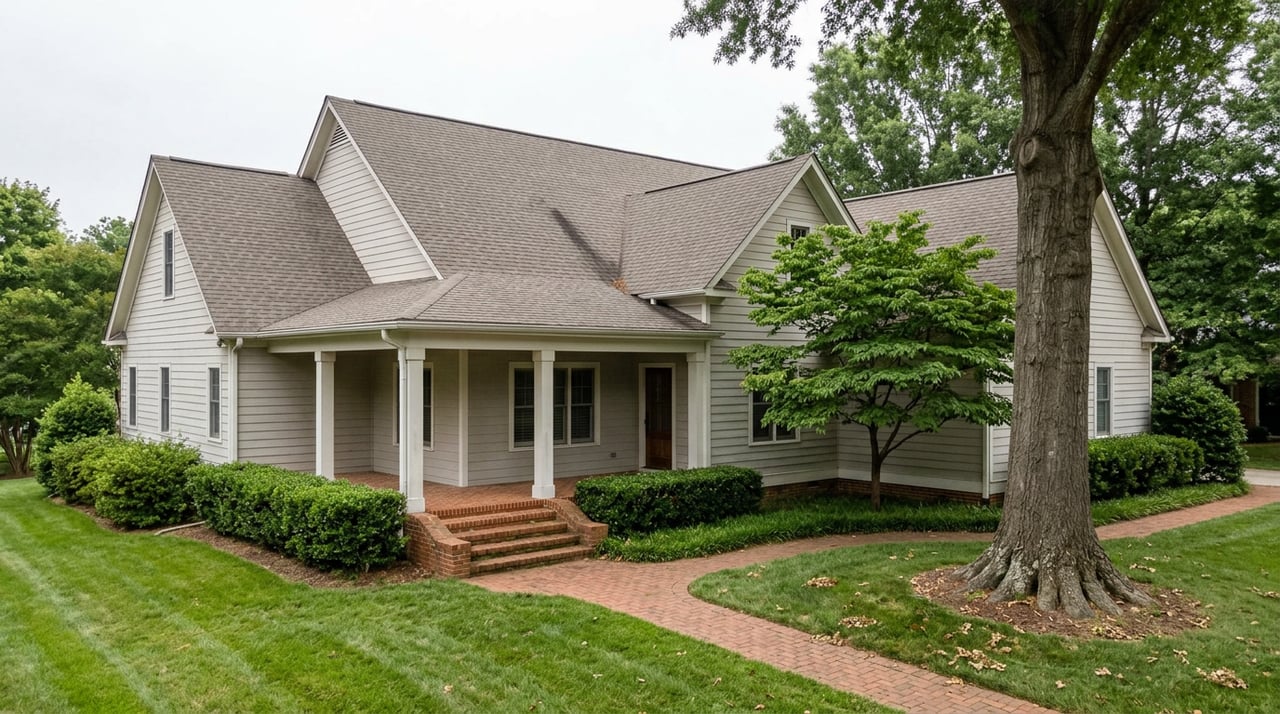
Decatur's Tree Ordinance Protects the Very Roots Breaking Your Sewer Line
September 24, 2026
September 24, 2026
The City of Decatur will not let you touch a tree without a permit. DeKalb County will not let you touch a sewer line without one either. Nobody in either building has to talk to the other, and nothing in either process asks whether the tree in question is the reason the pipe failed in the first place.
That gap is where a lot of Decatur renovation budgets go sideways.
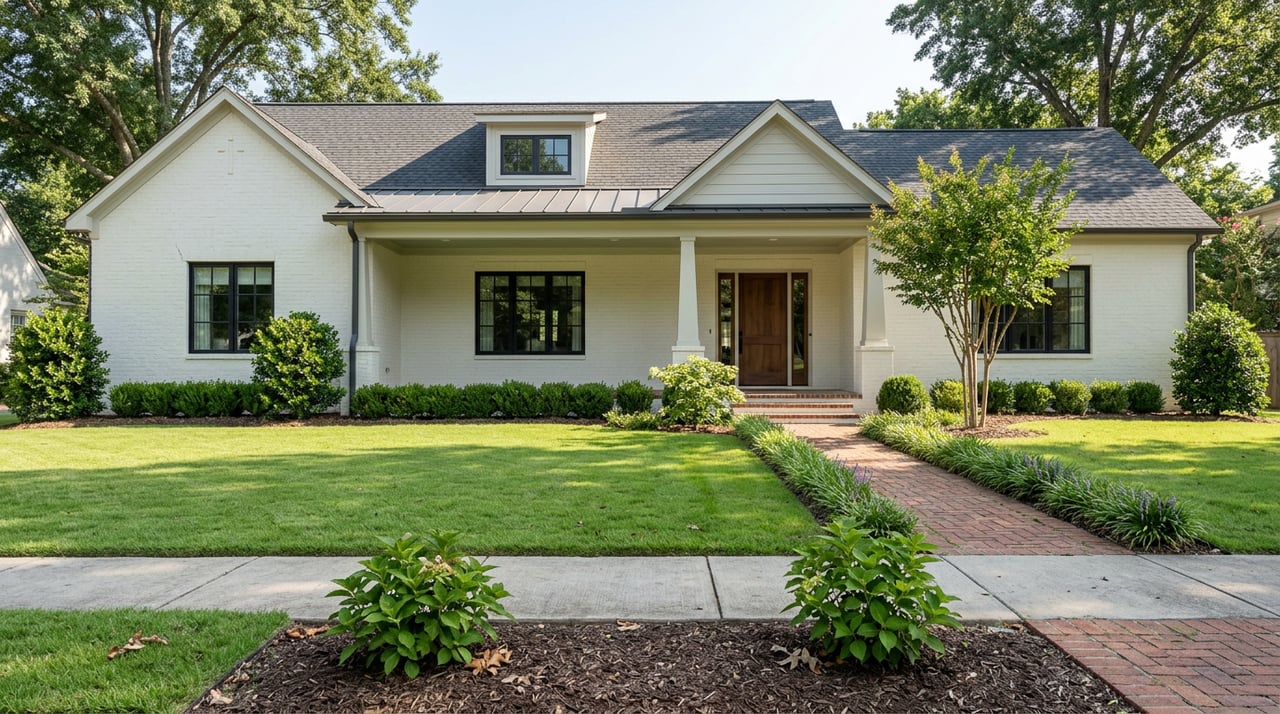
If you're circling a Craftsman bungalow near the square, a 1940s Cape Cod in Winnona Park, or a ranch in Glenlake, you're looking at a house built decades before PVC piping existed and decades before anyone wrote a tree ordinance to protect the canopy standing over it. Both of those facts are still true on the day you close, and they are about to collide the moment you pull a permit for anything more than paint.
Decatur's Tree Canopy Conservation Ordinance defines a protected tree as anything six inches or more in diameter at breast height. That threshold catches nearly every mature hardwood on a typical Oakhurst or Great Lakes lot, not just the specimen oak someone planted in 1950.
Once a tree qualifies, the rules get specific. No structure can sit closer than 10 feet from the trunk. The critical root zone, the buffer the city treats as off limits, is now calculated at 1.25 feet of radius for every inch of trunk diameter, up from the flat one-foot-per-inch standard the ordinance used before its last revision. Inside that zone, no more than 20 percent of the root area can be disturbed without a certified arborist's prescription approved by the city arborist directly. And before you can even file for a demolition, building, or site development permit that might touch a protected tree, you're required to sit down with that arborist first, not after plans are drawn, before.
Remove a protected tree and the city assesses a canopy loss fee, calculated against the annual benefit that tree was providing. The ordinance was tightened specifically because the city's own tree canopy analysis found that most of Decatur's remaining trees sit on private single-family lots, and that redevelopment of those same lots was the leading driver of canopy loss.
None of this is unusual for a city that has spent years building out programs like Tree Decatur and partnering with Trees Atlanta on canopy replanting. What is unusual is what sits directly underneath that protected root zone.
Decatur's older neighborhoods were plumbed for a much smaller house and a much thinner tree canopy than the one standing today. Cast iron, galvanized steel, and in some pockets clay pipe carry sewage out from bungalows near downtown and the Commerce Drive corridor, running underground through soil now laced with root systems that have had eighty or ninety years to grow.
Local plumbing crews who work these streets regularly describe Decatur's tree canopy as one of the densest in metro Atlanta, and they describe those same root systems as hard on sewer lines for a simple reason: roots chase moisture, and a hairline crack in an aging cast-iron joint is exactly the kind of seam a root will find first. Homes in the 30030 and 30032 zip codes carry a documented pattern of cast-iron sewer lines showing up alongside knob-and-tube wiring remnants and settling foundations, the kind of trio that shows up on inspection reports for houses built in the neighborhood's first construction wave.
Here is the part that doesn't show up in most renovation conversations until it's too late: the tree that's most likely to be causing that root intrusion is very often a protected tree under the ordinance you just read about. A century-old oak or poplar sitting 15 feet from your sewer lateral isn't just landscaping. It's both the asset the city wants preserved and the most probable cause of the pipe failure you're trying to fix.
The reason this collision catches people off guard isn't the ordinance itself. It's that the tree and the pipe answer to two completely different governments, and neither process is built to flag the other.
| Who regulates it | What triggers a review | |
|---|---|---|
| Tree removal or root zone disturbance | City of Decatur | Any demolition, building, or site development permit that could disturb a protected tree's critical root zone |
| Water and sewer repair or replacement | DeKalb County | Any work on the water or sewer line itself, since the city's own public works department directs residents to the county for water quality and sewer repairs |
The City of Decatur's public works page is direct about this split: water and sewer issues are handled by DeKalb County, not the city. So a homeowner who discovers root intrusion during a sewer scope is now managing two separate approval tracks that don't share a form, a fee schedule, or a timeline. The county can usually move on a straightforward lateral repair once permits are pulled. The city's tree side requires that pre-application arborist meeting before you can even apply for the building or site development permit that would let you dig near the root zone, and those meetings are typically held on a fixed weekly schedule rather than on demand.
If the fix requires cutting through a root system to reach the pipe, or if the contractor's excavation plan would disturb more than 20 percent of a protected tree's critical root zone, you're not just waiting on a plumber's schedule. You're waiting on an arborist's assessment, a prescription for how much root disturbance is allowable, and potentially a canopy loss fee if the tree doesn't survive the repair.
None of this means avoid the older housing stock in Oakhurst, Winnona Park, Great Lakes, or Glenlake. It means sequence the due diligence differently than you would in a newer subdivision.
If you're under contract on a pre-1970s Decatur home, a sewer scope during your inspection window tells you more than almost any other single test you can run. Root intrusion in a cast-iron or clay lateral is common enough in this housing stock that finding it isn't a red flag on its own, but finding it late, after you've already scheduled a kitchen bump-out or a rear addition near the same tree, absolutely is. Know the condition of the lateral before you finalize a renovation plan that puts a foundation, a deck, or a driveway inside 10 feet of a mature tree's trunk.
If the scope does turn up a problem, ask your contractor early whether the repair path runs anywhere near a protected tree's root zone. That single question determines whether you're looking at a straightforward county permit or a two-track process that starts with an email to the city arborist's office before anything else moves. Building that lead time into your renovation calendar from the start costs you nothing. Discovering it after a contractor has already scheduled excavation costs you weeks.
The ordinance and the pipe were never designed to compete with each other. They were designed by two different governments solving two different problems, decades apart, with no reason to consult one another. For a Decatur homeowner, that just means the burden of coordinating them falls on you, and it's a lot easier to carry when you know it's coming before you sign anything.
If you're weighing a fixer-upper in Oakhurst or Winnona Park, or getting ready to list a home where a renovation might run into this exact situation, Property Guys of Atlanta can walk through what the tree and sewer timelines actually look like for your specific address before you write an offer or a scope of work. Request your free home valuation and let's talk through the sequencing before it becomes a surprise.


Get assistance in determining current property value, crafting a competitive offer, writing and negotiating a contract, and much more. Contact me today.