Why No Two Websites Agree on North Buckhead's Home Prices
September 17, 2026
September 17, 2026
Open three tabs and search the same North Buckhead address on three different sites, and you will get three different stories about what your house is worth. One estimator puts the average home value at $676,165 as of May 2026, up half a percent over the prior year. A listing aggregator shows July 2026 median list prices at $537,000, down 16 percent from the month before. A third site, working off a handful of recent closings, reports a median sale price of $565,000 and calls that a 25 percent jump from a year earlier. None of these numbers is wrong. They are measuring three different neighborhoods that happen to share a name.
That is the actual story here, and it matters if you are trying to price a listing, size up a purchase, or just figure out whether your equity moved this year. North Buckhead is not one housing market wearing a single median. It is at least three, stacked inside boundaries that run roughly from Wieuca Road on the south to the Chattahoochee corridor on the west, Roswell Road on the east, and the Sandy Springs line on the north. Whichever of those three markets happened to trade in the window a given site is measuring determines the number you see.
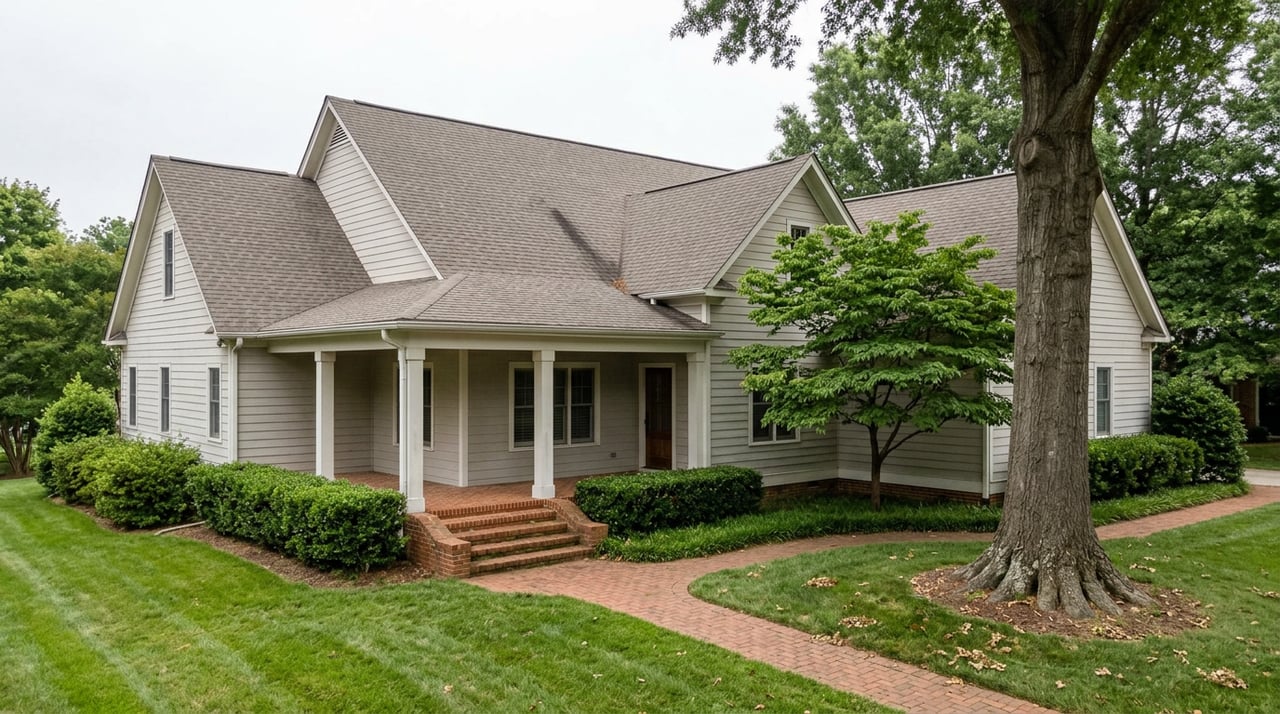
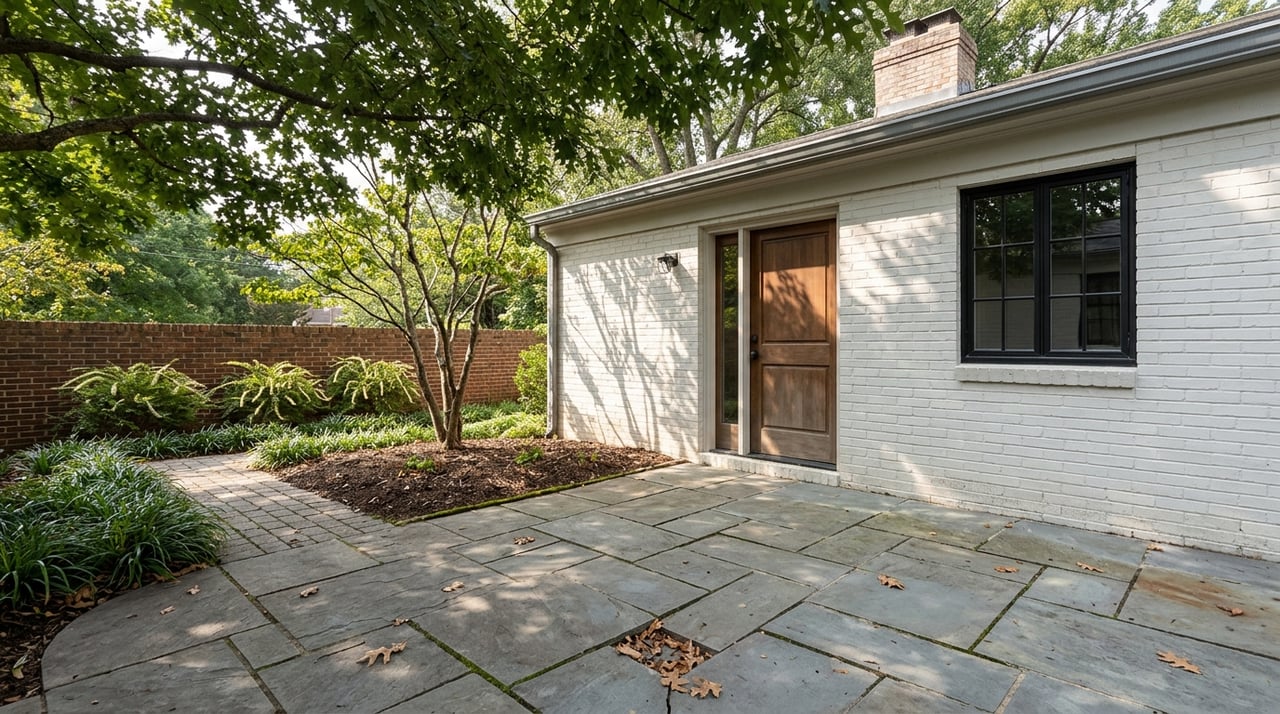
The oldest layer is the original housing stock. Most of it dates to the 1960s through 1980s, when the area filled in as a suburban residential community: brick ranches, split-levels, and traditional two-story colonials, typically 2,000 to 3,500 square feet, sitting on lots that often exceed half an acre. These homes anchor the entry point of the market, generally starting around $600,000 for a property that still needs updating.
The second layer is new construction, almost all of it built on a teardown. Because there is little raw land left, growth here comes from replacing an aging ranch with a larger, modern home on the same lot. Rickenbacker Drive has seen several of these rebuilds close in the $2 million to $3.5 million range. Streets like Old Ivy Road carry a similar pattern, with custom homes built by name-brand local builders replacing 1970s originals on quiet, larger-lot streets.
The third layer is vertical: high-rise condo towers that spill north from Buckhead Village, including buildings like the Ritz-Carlton Residences and Realm Condominium. Condo pricing in and around North Buckhead spans an enormous range, from units in the high $100,000s to penthouse-level residences well into the millions.
Blend those three inventories into a single "neighborhood average" and you get exactly the kind of number confusion showing up across the portals. A month where two teardown rebuilds close pulls the average sharply upward. A month where several condo units close pulls the median down, because condos trade at a lower price point than the detached homes even when the buildings themselves are expensive. One home site's own condo-focused search page put North Buckhead's June 2026 median at $590,000 with an average sale price of $902,473 in the same breath, a gap wide enough to tell you the average is being stretched by a handful of high-dollar towers while the median reflects a very different, more typical unit.
The internal inconsistency goes further than that. That same portal runs two separate North Buckhead pages that disagree with each other: one reports home prices down 1 percent over the trailing 12 months, while its own neighborhood profile page reports average sale price up 2 percent over roughly that same period. Both numbers can be true. They are just measuring different things, median versus average, one metric smoothing out the extremes and the other reflecting whatever specific mix of properties happened to close.
The reason this matters more here than in a larger, more uniform market is volume. One site's 30-day snapshot showed just 9 homes sold, down from 18 the year before. When your entire dataset for a month is 9 transactions, one $2 million teardown closing next to two condo sales in the $400,000s will swing a median by tens of thousands of dollars without a single home in the neighborhood actually changing in value. This is not a data quality problem you can fix by refreshing the page. It is a structural feature of a neighborhood built from three genuinely different products with thin monthly transaction counts in each one.
The practical takeaway: if you are comparing your home, or a home you are considering, against "the North Buckhead median," ask which of the three inventories that median is actually built from that month. A ranch on a half-acre lot should be compared against other ranches on half-acre lots, not against a blended number that includes a teardown rebuild three doors down and a condo two miles south.
There is a specific playbook running through the middle of this market, and it explains why the entry-level ranch inventory keeps shrinking. A buyer purchases an original 2,800-square-foot ranch on roughly 0.6 acres for around $750,000. They put $500,000 to $700,000 into a major renovation, adding a second story, opening up the floor plan, and finishing the home to a modern standard with an updated kitchen and primary suite. The result is a home closer to 5,000 square feet on a large, established lot, with an all-in cost around $1.25 million to $1.45 million, positioned squarely inside the neighborhood's $800,000 to $2 million sweet spot for updated homes in that size range.
That math only works because of a specific gap: original homes here are still priced at a discount to their underlying lot value even though the neighborhood sells for 15 to 25 percent less per square foot than comparable properties in Buckhead's most expensive pockets. Every renovation that follows this playbook removes one more entry-level ranch from the market and replaces it with a comparable sale at nearly double the price, which is part of why average annual appreciation here has run 6 to 9 percent over the past five years, with the newly built and recently renovated end of that range appreciating faster than the untouched originals.
North Buckhead sits inside the City of Atlanta, not Fulton County or Sandy Springs, and that distinction carries real weight for anyone planning a renovation or rebuild. It means Atlanta Public Schools rather than Fulton County Schools, and it means City of Atlanta water, sewer, and zoning and building codes rather than the county's or Sandy Springs' own systems. Buyers relocating from Sandy Springs or unincorporated Fulton County should expect a different permitting process here, worth understanding before a renovation timeline gets built into an offer.
The North Buckhead Civic Association has worked with the city on a formal master plan for the neighborhood, adopted by the Atlanta City Council in 2015 and folded into the city's broader development plan. That document is a useful starting point for anyone trying to understand how the area's traffic patterns, park access, and land use are meant to evolve, and it is a good reminder that zoning here runs through City Hall, not a county office.
Sarah Smith Elementary, located on Old Ivy Road, functions as a demand anchor for this market in a way that goes beyond the usual "good schools raise home values" story. Sarah Smith is a National Blue Ribbon School and has been an authorized IB World School offering the Primary Years Programme since 2006. It feeds into Sutton Middle School and then North Atlanta High School, giving families a full public school pathway without leaving the neighborhood.
That matters for reading the price data correctly. When a portal's monthly numbers dip because a batch of condo sales closed, homes inside the Sarah Smith attendance zone are largely insulated from that swing, because the buyers competing for those specific homes are not shopping condos as an alternative. If you are searching specifically for a renovated or original ranch inside that zone, the blended neighborhood median is telling you very little about what you will actually pay. The zone itself, not the average, is the more useful unit of comparison.
If you are comparing North Buckhead against another Atlanta neighborhood, do not lead with the median you saw on any single site. Ask which of the three markets, the original ranch stock, the teardown rebuilds, or the condo towers, actually matches what you are trying to buy or sell, and price against comparable sales inside that specific category. A well-priced original ranch and a newly finished 5,000-square-foot rebuild two streets apart are not competing for the same buyer, and they should never be measured against the same number.
Why do North Buckhead home prices look so different across sites in the same month? Each site pulls from a different slice of a small monthly transaction count and reports a different metric, average versus median, sometimes filtered to condos only. With as few as 9 sales in a 30-day window, one or two large or small transactions can swing the reported figure without reflecting a real shift in value.
Does buying in North Buckhead mean I am zoned for Fulton County schools? No. North Buckhead sits inside the City of Atlanta, so homes here are zoned for Atlanta Public Schools, including the Sarah Smith Elementary, Sutton Middle, and North Atlanta High feeder pattern, not Fulton County Schools.
Whichever tier of this market you are trying to buy into or sell out of, the number that matters is the one built from true comparables, not a neighborhood-wide blend. Property Guys of Atlanta works this market street by street, from the original ranch stock to the teardown rebuilds to the high-rise towers, and can tell you which comparables actually apply to your home. Request your free home valuation to get a number built on the right inventory, not an average of three different ones.


Get assistance in determining current property value, crafting a competitive offer, writing and negotiating a contract, and much more. Contact me today.