Sandy Springs Teardown Rebuild Sidewalk Rules to Know
August 13, 2026
August 13, 2026
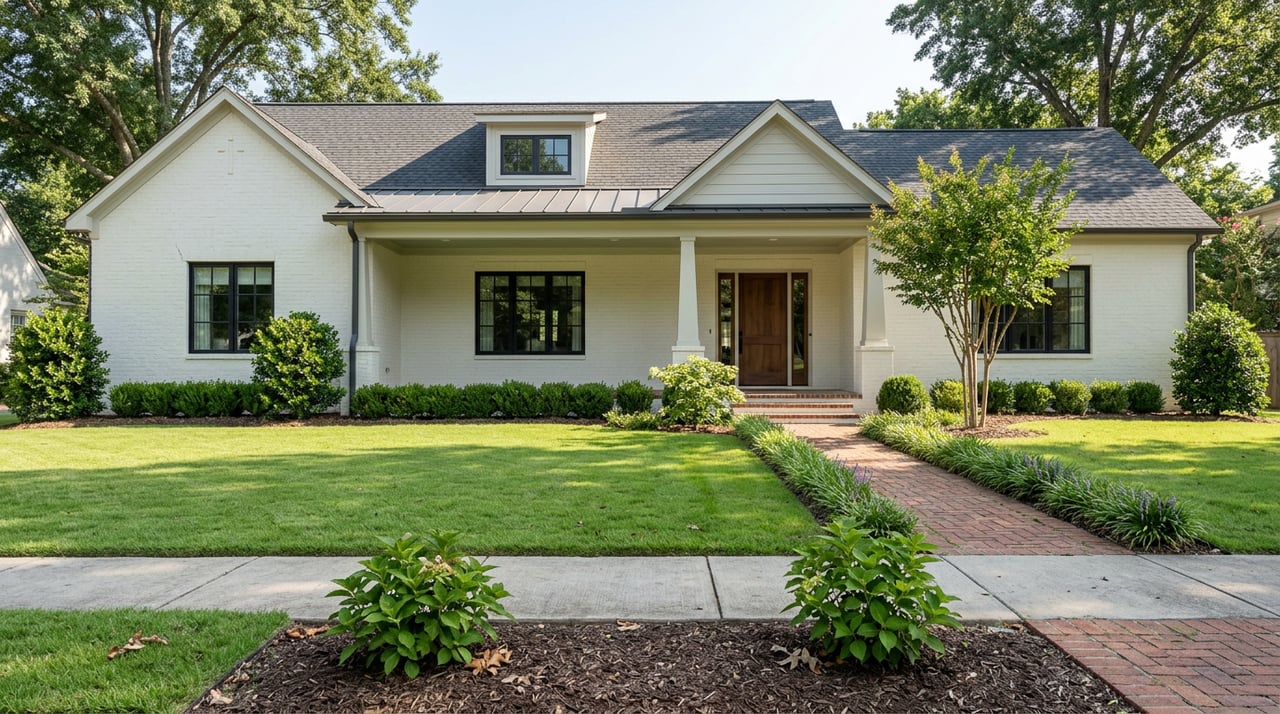
You found the lot. Maybe it's a half-acre off Mount Vernon Highway or a wooded corner near Hammond Drive, priced for the dirt because the house on it hasn't been touched since the Reagan administration. Your builder has a plan. Your contractor has a number. Then the Major Land Disturbance Permit application comes back from the city with a line item nobody budgeted for: a sidewalk.
This isn't a fee. It's not a suggestion. In Sandy Springs, tearing down and rebuilding on an existing single-family lot can trigger a legal obligation to construct street frontage improvements and dedicate right-of-way to the city, whether or not a sidewalk existed there before. The person who explained this most plainly is Marty Martin, the city's Public Works Director, who told the city council in June that teardown rebuilds have historically been required to build a sidewalk, and that nearly every project the city touches ends up with a sidewalk or sidepath component in some form.
That single fact reframes what a teardown actually costs in this city, and it matters more this year than most, because Sandy Springs is mid-rewrite on the very planning document that governs how far these obligations reach.
The mechanism lives in Article 10 of the city's Development Code, under the section governing streets and improvements. A Major Land Disturbance Permit, the kind almost any teardown-rebuild requires, triggers both required street and streetscape improvements. The code is specific about the exception: those requirements can only be waived if the city determines its own infrastructure project for that same segment is already underway, and even then, the waiver does not extend to the underlying obligation to dedicate right-of-way. In plain terms, you can sometimes avoid pouring the concrete yourself. You cannot avoid giving up the land.
Mayor Rusty Paul has drawn a technical distinction that matters if you're trying to estimate scope: the city separates sidewalks from sidepaths, because the Georgia Department of Transportation treats sidepaths, which run wider, as qualified infrastructure eligible for state and federal funding, while standard sidewalks are not. That distinction affects which grants a project can tap, but for a private homeowner facing a permit condition, the practical result is the same. Something gets built in front of your new house that wasn't required in front of the old one.
Most coverage of Sandy Springs walkability treats it as a public spending story. The city has put more than $54 million into sidewalks, paths, and trails since 2014, funded largely through the Fulton County Transportation Special Purpose Local Option Sales Tax, and the 2026 budget for sidewalks alone was just raised from $12 million to $16 million, with Fulton County voters deciding whether to renew that 0.75% sales tax this November.
That's the visible half of the ledger. The other half is quieter and doesn't show up as a line item anywhere, because it's paid in private permits rather than public dollars.
| Delivery mechanism | Funding source | Example |
|---|---|---|
| City-initiated project | TSPLOST sales tax, GDOT grants | Lake Forrest Sidewalk Phase 1: 1,240 linear feet of 6-foot sidewalk, contract awarded at $272,700 |
| Permit-triggered dedication | Individual property owner, via Major Land Disturbance Permit | Frontage improvements and right-of-way required as a condition of teardown-rebuild approval, no separate city budget line |
The Lake Forrest project gives you a rough sense of scale for what a single block-length segment costs when the city is the one writing the check. A private frontage obligation on one lot is typically much shorter than 1,240 feet, but it rides on the same technical standard, the same materials, and the same inspection process. It just gets paid by whoever is holding the building permit, not the transportation fund.
Green Hill Road and Green Hill Place, a small T-shaped neighborhood off Roswell Road south of I-285, is the clearest example of how this plays out at street level. The road had sat on the resurfacing candidate list for four to five years with a Pavement Condition Index score of 26, well under the city's threshold of 50 for prioritization. It finally got added to the state's FY 2026 Local Maintenance and Improvement Grant list this past December. When a council member asked why now, Martin's answer wasn't about the pavement itself. It was about what had been happening underneath it: numerous sewer and water line tie-ins had been made as part of the teardown and rebuilding already underway in that neighborhood.
Read that carefully. A cluster of private teardown permits, each one triggering its own utility connections and frontage work, was disruptive enough to the road surface that it helped justify moving Green Hill up the city's paving queue ahead of streets with worse scores that hadn't seen the same redevelopment pressure. Individual permit decisions, made lot by lot by different owners with no coordination between them, functioned as a de facto capital improvement program for that street. Nobody voted on that outcome. It happened because enough people rebuilt in the same place around the same time.
If you're evaluating a teardown lot on a street with several other recent rebuilds nearby, that history is doing real work. It tells you the street is more likely to see utility and frontage activity soon, for better or worse, and it's a legitimate question to ask the city's Public Works office before you assume your project will be a quiet, isolated job.
Here's the part that makes timing matter. Sandy Springs is only a few weeks into a year-long rewrite of its comprehensive plan, a process city staff and residents are calling the Next Chapter. It kicked off at a public meeting at City Springs on June 23, 2026, with more than 50 residents weighing in on density, housing, and recreation, and it's scheduled to reach the Georgia Department of Community Affairs by June 2027.
A comprehensive plan isn't a zoning ordinance. It carries no direct legal force. But city boards and council members routinely cite it when they vote on rezonings and development decisions, which means the character map being drawn right now will shape how flexibly, or how strictly, teardown obligations get applied over the next decade.
The early feedback is telling. Ronda Smith, who chairs the plan's advisory committee as president of the Sandy Springs Council of Neighborhoods, has been direct about the tension. Lot sizes in her own neighborhood haven't changed in the 29 years she's lived there, and protecting that hasn't shifted as a community priority. At the same time, she's pointed out that some of the goals residents want, like preserving tree canopy and expanding path connectivity, pull in opposite directions, and pursuing one often means sacrificing the other. Since the 2017 plan, the city has kept roughly three-quarters of its land inside residential neighborhoods, parks, or green space, and has put $172 million into infrastructure over the past decade outside of county, state, or federal funding. The Next Chapter is deciding whether that balance holds or shifts, and the city has posted open houses for public input in mid-August 2026 as part of that process.
If you're pulling a teardown permit this year, you're doing it under the current version of these rules. If you wait until the plan is adopted next summer, you may be doing it under a different one. Neither outcome is guaranteed to be better or worse for a given lot, but it's a real variable worth asking about before you commit to a closing date, not after.
None of this happens in a market that's cushioning the cost with easy appreciation. Sandy Springs home prices for the three months ending in May 2026 came in at a median of $715,000, down about 1% year over year. Inventory has stayed tight through the first half of 2026, with demand concentrated in the $700,000 to $1.5 million range, but tight inventory and a soft median aren't the same thing as rising values absorbing surprise costs. A frontage improvement and right-of-way dedication that shows up mid-permit is a real line item this year, not a rounding error against appreciation you can count on.
The practical move, before you write an offer on a teardown lot, is to ask the city's Public Works office directly whether a city-led project is already scheduled for that street segment. If one is, you may qualify for the narrow waiver the code allows. If not, budget for frontage work and right-of-way dedication as part of the deal from the start, the same way you'd budget for a septic inspection or a survey. It's cheaper to plan for it in your offer than to discover it in your permit.
Does every teardown in Sandy Springs require a sidewalk? Not automatically, but Article 10 of the Development Code makes street and streetscape improvements a standard condition of a Major Land Disturbance Permit, and the Public Works Director has described sidewalk or sidepath components as the norm rather than the exception on projects the city reviews.
Can I get out of the requirement? The code allows a waiver only if the city determines its own infrastructure project for that segment is already underway, and even that waiver doesn't remove the separate obligation to dedicate right-of-way to the city.
Will the Next Chapter comprehensive plan change these rules? The plan itself isn't legally binding, but it's routinely cited by city boards during rezoning and development votes, and it's still in draft with adoption targeted for mid-2027, so the version of these expectations in place today may not be the version in place a year from now.
If you're weighing a teardown lot in Sandy Springs and want a straight read on what a specific street or permit history actually implies for your budget, that's the kind of local groundwork Property Guys of Atlanta does before you write an offer. Request your free home valuation and we'll walk the lot, the permit history, and the numbers with you before you're locked into a closing date.


Get assistance in determining current property value, crafting a competitive offer, writing and negotiating a contract, and much more. Contact me today.